
Sony officially announced the PlayStation 4 last week and kicked off the next round of the so-called ‘Console Wars’. Much of the mainstream consumer media has been quick to compare it to the unannounced Microsoft Xbox 360 successor and the Nintendo Wii U as the ‘next big thing’, however they’re failing to look past the hype, see the bigger picture and educate consumers.
The developments in gaming since the last round of consoles mean that a new wave of devices that just run games and connect to the Internet won’t cut it. Because of this Sony has had no choice but to design the PlayStation 4 as essentially a closed PC that you can’t upgrade. This means that no matter how shiny and fast it is when released, nothing can prevent the PS4 becoming out of date in a couple of years.
Valve Software’s upcoming Steam Box is one example of a living room PC-based gaming device that you can upgrade, and is the real sign of things to come. Technology advances mean that you’ll no longer need a huge, expensive PC to stay within the cutting-edge of gaming, and manufacturers will no doubt make it easier and easier for even the most technologically illiterate consumer to upgrade their gaming machines.
Unless the next Xbox console is properly upgradable, which is very unlikely, the ‘Console Wars’ between Sony, Microsoft and Nintendo are an irrelevance designed purely to generate marketing buzz around products that don’t deserve the attention. It is the journalist’s job to see past the flashy product launches and big-budget marketing stunts and inform consumers that the gaming console in the traditional sense is an archaic concept.
Of course, it’s not just gaming consoles that are kept alive and kicking by clever marketing strategies. Some parts of the TV (Sky, anyone?) and music industry (the ‘big four’ labels) are clinging on when they shouldn't be thanks to great marketing campaigns that really maximise on their dwindling relevance.
28 February 2013


23 February 2012
Bewildered UK media are way behind the times with Pirate Bay ruling
In their coverage of the Pirate Bay story on Monday, the Metro included this sentence in isolation: “The music industry currently loses billions every year as a result of music piracy.” It is this kind of misinformed, lazy journalism that keeps the majority of consumers in the dark about copyright and piracy. Like the greedy copyright bigwigs, too many people are simply failing to comprehend that a freely downloaded album or movie does not equate to a lost sale. In fact, in what I would say is most cases; someone who downloads something ‘illegally’ would not necessarily have gone out and paid full-whack for the product if that was their only option.
There is nothing the governments of the world can do to stop people sharing copyright material freely online. Instead, companies need to start offering alternatives to rival the convenience free downloads provide. Imagine this scenario – you want to watch a certain movie one night, or get some new music for a long drive. Do you travel to HMV, pay £12 for a CD or DVD (with most of that money going to anyone but the artist), order from Amazon and wait three days, or do you pop onto Pirate Bay and have it ready to go within the hour? Even iTunes makes the process of buying music far more difficult and inconvenient than it needs to be – locking your legitimately bought files to use with only their own products in Apple’s typically paranoid style.
The Pirate Bay is the most popular ‘BitTorrent’ site in the world – hosting millions of links to freely download any music, movie, video game or software you could ever hope for. Now one of the top 100 visited sites in the world, it is a glorious example of human freedom and sharing. So predictably, along came the High Court to attempt to block UK internet users from accessing the site by June. Exasperatingly, this is the kind of action they and the major label bosses still believe will actually curb piracy and revive the music industry. They are wrong, of course; the following day Pirate Bay revealed plans to change the way it operates to escape this ruling having any effect.
The Pirate Bay is the most popular ‘BitTorrent’ site in the world – hosting millions of links to freely download any music, movie, video game or software you could ever hope for. Now one of the top 100 visited sites in the world, it is a glorious example of human freedom and sharing. So predictably, along came the High Court to attempt to block UK internet users from accessing the site by June. Exasperatingly, this is the kind of action they and the major label bosses still believe will actually curb piracy and revive the music industry. They are wrong, of course; the following day Pirate Bay revealed plans to change the way it operates to escape this ruling having any effect.
Emerging from these recent debates is the idea that in this digital age we as consumers now hold the power – a few corporate bigwigs can no longer bully and control us into paying over the odds for a product the artist sees a minimal return from. Major music labels are rightly very worried, but their haphazard thought processes in combating piracy are only making things worse.
Throughout society there remains a devastating ignorance on the subject of piracy, thanks largely to consumers being brainwashed by poor journalism such as the Metro’s on Monday. If more people can realise this, and not just assume that breaking copyright law is inherently ‘wrong’, we can speed up this shift in power. It is time to start celebrating freedom, sort out the messy legalities in a mature and reasonable way and stop the corporate bullies’ wallets growing ever fatter.
15 December 2011
My favourite and least favourite PC games of 2011
Favourites - in no particular order
Batman: Arkham City - such a slick game, probably the most impressive of the year.
Battlefield 3 - the single player wasn't much more than a tech demo, but the multiplayer has improved well over Bad Company 2.
Dead Island - a real surprise package. Was it going to be a clone of Dead Rising (which I don't enjoy) or Left 4 Dead? Turns it out was a weird but fascinating blend of the two.
Deus Ex: Human Revolution - Did a good job of living up to the name. Just a shame it had to be consolified in many ways, otherwise it could have been amazing.
Driver: San Francisco - this is the game that got the biggest grin out of me this year. Solid, smooth and enjoyable with a very clever gameplay innovation in Shift.
LIMBO - this is the best indie game of the year, and probably the most intriguing I've ever played.
Portal 2 - Delightful entertainment.
Least favourite
Call of Duty: Modern Warfare 3 - Quite possibly the most boring game I have ever played. All hell broke loose, and I yawned.
Crysis 2 - The game actually has fun multiplayer, and the single player has lots of positives, but I was devastated when I clocked on to the fact that you can stroll past all the enemies in cloak mode, even on hard difficulty. One of the worst flaws I've ever experienced in a game.
Homefront - A pointless, shameless game
Red Faction: Armageddon - Worst possible way to build on Guerrilla, swapping open-world for linear caves.
I have yet to play LA Noire and Saints Row The Third...
Batman: Arkham City - such a slick game, probably the most impressive of the year.
Battlefield 3 - the single player wasn't much more than a tech demo, but the multiplayer has improved well over Bad Company 2.
Dead Island - a real surprise package. Was it going to be a clone of Dead Rising (which I don't enjoy) or Left 4 Dead? Turns it out was a weird but fascinating blend of the two.
Deus Ex: Human Revolution - Did a good job of living up to the name. Just a shame it had to be consolified in many ways, otherwise it could have been amazing.
Driver: San Francisco - this is the game that got the biggest grin out of me this year. Solid, smooth and enjoyable with a very clever gameplay innovation in Shift.
LIMBO - this is the best indie game of the year, and probably the most intriguing I've ever played.
Portal 2 - Delightful entertainment.
Least favourite
Call of Duty: Modern Warfare 3 - Quite possibly the most boring game I have ever played. All hell broke loose, and I yawned.
Crysis 2 - The game actually has fun multiplayer, and the single player has lots of positives, but I was devastated when I clocked on to the fact that you can stroll past all the enemies in cloak mode, even on hard difficulty. One of the worst flaws I've ever experienced in a game.
Homefront - A pointless, shameless game
Red Faction: Armageddon - Worst possible way to build on Guerrilla, swapping open-world for linear caves.
I have yet to play LA Noire and Saints Row The Third...
18 March 2011
Burial/Four Tet/Thom Yorke - Text 010
What an exciting collaboration this is. When artists come together to form a supergroup like this, the results aren't always as amazing as expected. In the track below, they really are. You can hear the workings of all three artists weaving together with lush results. I'm now dreaming of an album by this lot, maybe with Flying Lotus thrown in for good measure.
4 February 2011
The Future of the Gaming Industry
Last Wednesday’s discussion at the Institute of Contemporary Arts, The Future of the Gaming Industry, left me feeling dismayed rather than excited about what to expect from my beloved pastime. According to the industry experts speaking at the event it would seem that ‘mobile’ and ‘social’ are the buzzwords for the foreseeable future. Mobile gaming and Facebook gaming are all well and good for the casual, passive gamer but where does this leave those who crave technical innovation and engrossing narrative experiences?
According to Nicholas Lovell, founder of the blog Gamesbrief, the industry is going to split into three distinctive types of games – dominant triple-A blockbusters such as the Call of Duty series, persistent world subscription-based games like World of Warcraft and independently developed games. He said we are now getting to the stage where only a “few big players can experiment in the medium” with huge financial backing. Judging by the condition of the games currently being released by these major players, there’s cause for concern.
Take the aforementioned Call of Duty as the prime example. The last two editions of the franchise - Modern Warfare 2 in 2009 and Black Ops last year – were each unveiled to a media frenzy of a magnitude not before seen in the industry. But why? They are mindless, unoriginal and built on technically flawed foundations and aging technology (check out my scathing review of Black Ops). Their target market, however, is casual gamers who play solely online for the social experience it offers. It would seem this rapidly expanding audience do not care about such trivialities as whether a gun recoils in the correct way, or whether the game’s engine is horribly outdated. What they want is to be able to turn on their games console, pick up their controller and shoot people whilst having a laugh with their mates. This is the market the vast majority of publishers will focus on, and where the big money will be spent, inevitably alienating smaller developers with bigger ideas.
Mobile gaming is advancing technically and becoming more sophisticated in content. The market for portability is ever-present, and with Sony and Nintendo focusing more on the area and developers of games for smartphones offering up an increasing number of exciting and reputable titles, it seems this industry cannot fail to grow rapidly.
Going back to social gaming, Tom Chatfield, author of Fun Inc.: Why games are the 21st Century's most serious business, said “Facebook is going to generate hundreds of millions of dollars” for those who develop games for the site. He added that we are living in a “value generation” where the “quality of attention” offered by games, now accessible enough for pretty much everyone, “is of a much higher value than other media”. Games based on simple, proven mechanics, such as Farmville and clones of Scrabble have grabbed the attention of an incredible range and volume of Facebook users. It was mentioned that half of the 600 millions Facebook users have installed some form of game app, leading developer Michael Acton-Smith to believe that in the future the question won’t be “do you play games?”, but “what games do you play?”
According to Nicholas Lovell, founder of the blog Gamesbrief, the industry is going to split into three distinctive types of games – dominant triple-A blockbusters such as the Call of Duty series, persistent world subscription-based games like World of Warcraft and independently developed games. He said we are now getting to the stage where only a “few big players can experiment in the medium” with huge financial backing. Judging by the condition of the games currently being released by these major players, there’s cause for concern.
Take the aforementioned Call of Duty as the prime example. The last two editions of the franchise - Modern Warfare 2 in 2009 and Black Ops last year – were each unveiled to a media frenzy of a magnitude not before seen in the industry. But why? They are mindless, unoriginal and built on technically flawed foundations and aging technology (check out my scathing review of Black Ops). Their target market, however, is casual gamers who play solely online for the social experience it offers. It would seem this rapidly expanding audience do not care about such trivialities as whether a gun recoils in the correct way, or whether the game’s engine is horribly outdated. What they want is to be able to turn on their games console, pick up their controller and shoot people whilst having a laugh with their mates. This is the market the vast majority of publishers will focus on, and where the big money will be spent, inevitably alienating smaller developers with bigger ideas.
Mobile gaming is advancing technically and becoming more sophisticated in content. The market for portability is ever-present, and with Sony and Nintendo focusing more on the area and developers of games for smartphones offering up an increasing number of exciting and reputable titles, it seems this industry cannot fail to grow rapidly.
Going back to social gaming, Tom Chatfield, author of Fun Inc.: Why games are the 21st Century's most serious business, said “Facebook is going to generate hundreds of millions of dollars” for those who develop games for the site. He added that we are living in a “value generation” where the “quality of attention” offered by games, now accessible enough for pretty much everyone, “is of a much higher value than other media”. Games based on simple, proven mechanics, such as Farmville and clones of Scrabble have grabbed the attention of an incredible range and volume of Facebook users. It was mentioned that half of the 600 millions Facebook users have installed some form of game app, leading developer Michael Acton-Smith to believe that in the future the question won’t be “do you play games?”, but “what games do you play?”
18 November 2010
Call of Duty: Black Ops (Single-player) review
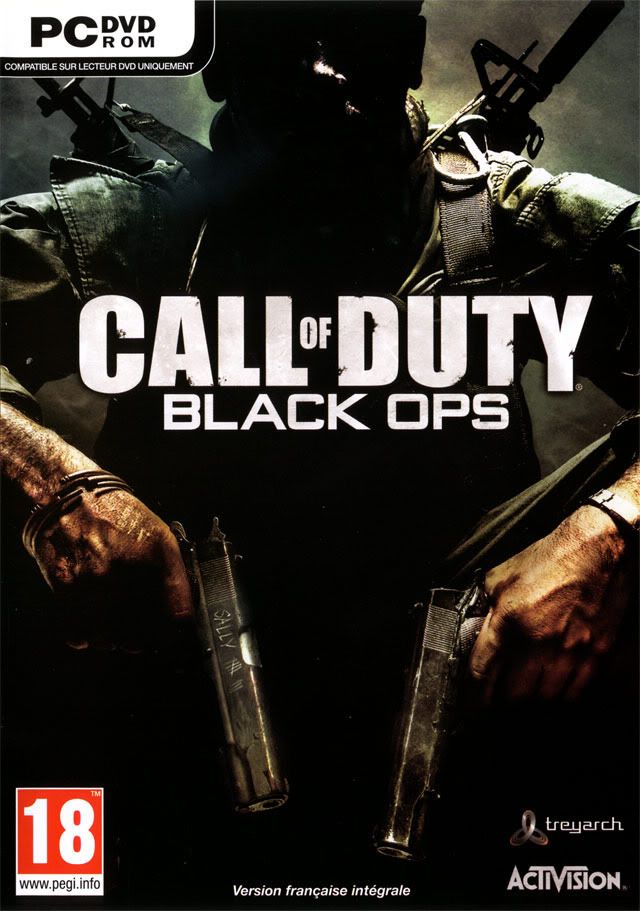
Now we arrive at Black Ops, which for hardcore gamers with a true eye for quality has turned out to be pretty much an irrelevant title. With the enormous sums of money Activision must be making from the series, using the same tired engine for the fourth time in a row is an indicator of their blatant greed and agenda for quantity over quality. Not only that, Black Ops somehow manages to be worse than it's predecessors both graphically and performance-wise!
First impressions then are that I'm playing a game from 2004, but I can see past that. You only have to look as far back as Amnesia: The Dark Descent to see that a game can use old tech but be brilliant. It's after about 15 minutes of play, however, that I begin to realise that Call of Duty Black Ops is not only severely flawed, but fundamentally broken. I'm referring to the fact that I had to restart the game three times as the shaky set piece system failed to initiate the next sequence, even after I reloaded from the last checkpoint. When a game relies so much on this kind of scripting, the minimum requirement is that it works. Fortunately it didn't happen again after the nightmare start. What I did experience consistently however was such nonsense as having to progress a certain distance before enemies stopped respawning, an inexcusable flaw that completely shatters any illusion that could have otherwise been built up with better coding.
While the old school run-and-gun gameplay is generally uninspired, there are some enjoyable moments. Rappelling down a building before smashing through a window and unleashing hell in super-slow motion is an example of the more engaging moments that are all too rare. For the most part, you'll be blasting your way through the levels with a feeling that you're wasting your time. I will mention however that Black Ops possesses the almost unheard of attribute of gradual improvement as the game progresses.
The feel of the weaponry has to be the worst I have ever come across in a shooter. The guns have absolutely no recoil - try emptying a clip from an assault rifle and you'll see almost no movement. They all sound like pea shooters and there is little to distinguish them. The AI is rudimentary, with no real improvement evident over even the first Call of Duty from 2003. All of which of course makes for extremely dull shootouts.
Black Ops' soundtrack is a varied and strange mixture of the cringe worthy, brave and excellent. Sometimes a godawful dance beat is introduced that does its best to detract from any semblance of enjoyment you might be having. The game's finale, however, is enhanced by a well-fitting track and when the Rolling Stones' Sympathy For The Devil creeps in during a boat level, you'll forget for a couple of minutes how dull the combat is.
There's a story in there too. It's actually slightly more interesting than you'd expect from a game of this type, though I never found myself at all engrossed. Killing Fidel Castro is this edition's Daily Mail-baiting version of the 'airport level', which again had about as much emotional impact on me as your average soap opera.
If you're wondering why I've not accounted for the multiplayer in this review, it's because I don't see the point in playing it, and didn't. There are plenty of better ways to get your kicks online, with the previously mentioned Bad Company 2 currently leading the way. Call of Duty is however a much more accessible series that is now designed for casual gamers and console kids. Be warned; this will be reflected by the depressingly low maturity levels of the community.
Despite all this, most journos have been inexplicably generous in their reviews, with many handing out scores well into the 90s. With the game's Metacritic score currently at 85/100 for critic reviews with a user score of 3.8/10, we at least know where a chunk of the development budget went...
4/10
17 October 2010
Amnesia: The Dark Descent

I urge anyone who is interested in horror to play this game, as it might just be the most genuinely harrowing title the genre has ever thrown up. Don't forgot to turn the lights off and don your headphones!
27 July 2010
PC Zone - gone but not forgotten
Although I didn’t realise it before the news broke, the closure of the most-grown-up-yet-most-childish gaming magazine has been inevitable for a while. With PC gamers tending to be web-savvy, sales of PC Zone have fallen dramatically in the last few years and the time has come that it is no longer profitable.
It may sound strange to be saddened by the closure of a PC games magazine, however PC Zone is one with a fan base who read the magazine for its wit and quality of writing as much as the games news.
The formula of brutally harsh reviews where other magazines were too gutless, excellent engagement with readers (more recently in the form of online gaming ‘Fight Clubs’), wonderfully inventive features and dark humour ensured it has been a cover-to-cover read of mine for about 12 years.
To put the ballsy humour into perspective, this is the magazine that helped launch the career of Charlie Brooker, whose comic strip Cruelty Zoo got it pulled off the shelves of W H Smith.
Other memories that spring to mind when reminiscing on the 17-year history of the magazine are the test in which staff played games whilst becoming increasingly drunk to see how it affected their performance, and the magazine carelessly failing to warn buyers that the cover disc was filled with super-gory demos before being slapped with an 18 rating and joking about it.
September’s issue will be the last; however mourning subscribers will be praying for an online edition of some kind. Stiff upper lip and all that – maybe this is the shock I need to get with times.
It may sound strange to be saddened by the closure of a PC games magazine, however PC Zone is one with a fan base who read the magazine for its wit and quality of writing as much as the games news.
The formula of brutally harsh reviews where other magazines were too gutless, excellent engagement with readers (more recently in the form of online gaming ‘Fight Clubs’), wonderfully inventive features and dark humour ensured it has been a cover-to-cover read of mine for about 12 years.
To put the ballsy humour into perspective, this is the magazine that helped launch the career of Charlie Brooker, whose comic strip Cruelty Zoo got it pulled off the shelves of W H Smith.
Other memories that spring to mind when reminiscing on the 17-year history of the magazine are the test in which staff played games whilst becoming increasingly drunk to see how it affected their performance, and the magazine carelessly failing to warn buyers that the cover disc was filled with super-gory demos before being slapped with an 18 rating and joking about it.
September’s issue will be the last; however mourning subscribers will be praying for an online edition of some kind. Stiff upper lip and all that – maybe this is the shock I need to get with times.
25 June 2010
How to discover electronic music online and improve your collection
No matter how much time and effort you put into expanding your electronic music collection and making sure you don't miss out on any essential albums or tracks, there's always a feeling that attempting to do more than scrape the surface is futile.
Here are a few tips on keeping up to speed, completing artist discographies and discovering lesser known gems:
Electronic music forums such as WATMM and Xltronic have passionate communities with members who discuss new releases.
Discogs is one of the most invaluable resources the internet has to offer, the absolute ultimate in discographies.
Last.fm is a fantastic place to discover artists, either from your own recommendations page, similar artist lists or specific genre lists.
Allmusic is a good place to discover artists and educate yourself on genres.
Wikipedia is a good place to get an overview of the many different genres and the most high-profile artists operating within them. Check out this list.
Resident Advisor has a regularly updated album reviews section.
For me, online stores Boomkat and Bleep are the best way to keep track of new releases. Essential bookmarks.
And finally, who could forget Ishkur's legendary Guide to Electronic Music, which is now sadly quite dated.
Here are a few tips on keeping up to speed, completing artist discographies and discovering lesser known gems:
Electronic music forums such as WATMM and Xltronic have passionate communities with members who discuss new releases.
Discogs is one of the most invaluable resources the internet has to offer, the absolute ultimate in discographies.
Last.fm is a fantastic place to discover artists, either from your own recommendations page, similar artist lists or specific genre lists.
Allmusic is a good place to discover artists and educate yourself on genres.
Wikipedia is a good place to get an overview of the many different genres and the most high-profile artists operating within them. Check out this list.
Resident Advisor has a regularly updated album reviews section.
For me, online stores Boomkat and Bleep are the best way to keep track of new releases. Essential bookmarks.
And finally, who could forget Ishkur's legendary Guide to Electronic Music, which is now sadly quite dated.
24 May 2010
If Valve made Modern Warfare 2 and the Bioshock pitch
Valve's continued support of their games and interaction with their fans is heart-warmingly wonderful, and in stark contrast to greedy and arrogant companies such as Infinity Ward and Activision. To highlight this, one gamer has imagined what the world would be like if Valve made Modern Warfare 2, bringing back memories of just how much the actual creators screwed us last year.
Elsewhere, Bioshock creators Irrational are drip-feeding their pitch document of the game to fascinated fans, calling it a "masterful fusion of design and marketing, selling [publishers] the idea of supporting our little odyssey beneath the waves."
Elsewhere, Bioshock creators Irrational are drip-feeding their pitch document of the game to fascinated fans, calling it a "masterful fusion of design and marketing, selling [publishers] the idea of supporting our little odyssey beneath the waves."
24 March 2010
Concept album: Autechre - SGS-teertaiht
Artwork TBC
To celebrate the release of Autechre's tenth full-length album I have imagined a release the duo would consider far too tacky. The title is a scramble of Greatest Hits, because Autechre would obviously never use that name. The tracklist of the first three CDs is made up of my three favourite tracks from each album in chronological order. I feel this is the most suitable arrangement as it shows how the music has developed over the last two decades. The fourth CD is a compilation of tracks from Autechre's EPs and singles, again chronological and with a rule of only one track per release. This all comes packaged as a four CD set with new artwork sleeves and additional sleeves with artwork from all ten albums and the EP's and singles.
Tracklist:
CD1
1. Basscadet
2. Doctrine
3. 444
4. Foil
5. Piezo
6. Nil
7. Stud
8. Eutow
9. Gnit
10. Cipater
Length: 1hr 13mins
CD2
1. Cichli
2. Pule
3. Acroyear 2
4. 777
5. Rae
6. Cfern
7. Pen Expers
8. Parhelic Triangle
9. 61e.CR
10. Surripere
Length: 1hr 16mins
CD3
1. P.:Ntil
2. LCC
3. Ipacial Section
4. Augmatic Disport
5. Phylopn
6. Blyz Castl (Japanese bonus track)
7. Perlence range7
8. see on see
9. d-sho qub
10. Yuop
Length: 1hr 10mins
CD4
1. Flutter
2. Garbagemx36
3. Second Scepe
4. Goz Quarter
5. Tilapia
6. Drane
7. Dropp
8. Autechre Play At Drowning In A Sea of Indiependance [Original Composition by Bic]
9. Blifil
10. Gantz Graf
Length: 1hr 23mins (part a of track cut to fit CD)
To celebrate the release of Autechre's tenth full-length album I have imagined a release the duo would consider far too tacky. The title is a scramble of Greatest Hits, because Autechre would obviously never use that name. The tracklist of the first three CDs is made up of my three favourite tracks from each album in chronological order. I feel this is the most suitable arrangement as it shows how the music has developed over the last two decades. The fourth CD is a compilation of tracks from Autechre's EPs and singles, again chronological and with a rule of only one track per release. This all comes packaged as a four CD set with new artwork sleeves and additional sleeves with artwork from all ten albums and the EP's and singles.
Tracklist:
CD1
1. Basscadet
2. Doctrine
3. 444
4. Foil
5. Piezo
6. Nil
7. Stud
8. Eutow
9. Gnit
10. Cipater
Length: 1hr 13mins
CD2
1. Cichli
2. Pule
3. Acroyear 2
4. 777
5. Rae
6. Cfern
7. Pen Expers
8. Parhelic Triangle
9. 61e.CR
10. Surripere
Length: 1hr 16mins
CD3
1. P.:Ntil
2. LCC
3. Ipacial Section
4. Augmatic Disport
5. Phylopn
6. Blyz Castl (Japanese bonus track)
7. Perlence range7
8. see on see
9. d-sho qub
10. Yuop
Length: 1hr 10mins
CD4
1. Flutter
2. Garbagemx36
3. Second Scepe
4. Goz Quarter
5. Tilapia
6. Drane
7. Dropp
8. Autechre Play At Drowning In A Sea of Indiependance [Original Composition by Bic]
9. Blifil
10. Gantz Graf
Length: 1hr 23mins (part a of track cut to fit CD)
22 March 2010
Crippling anti-piracy measures destroying reputation of PC game companies
It seems that games publishers will stop at nothing in their inexplicably mishandled attempts to prevent piracy damaging sales of new releases. The latest high-profile debacle came from Ubisoft in the form of Assassins Creed 2’s ‘always connected’ requirement, which causes players to lose progress in single-player if their internet connection goes kaput.
Until now, little has been done to respond to the backlash from irate gamers, with DRM (digital rights management) seemingly becoming more and more intrusive on legal copies.
One Twitter user spoke for many when he pleaded “it’s not gonna stop pirates so please stop so PC gaming stays alive.” Elsewhere, a YouTube video called A Real-World DRM finds humour in the situation, showing what might happen if there was a form of DRM on everyday household objects.
Public outrage on the topic has understandably boiled over to the point that today Valve Software decided to remove Ubisoft’s DRM-riddled offering from its Steam service. According to a ‘PC games industry insider’, the move was made in order for the development giant to protect its own “reputation for customer service”.
What makes all this worse is that any anti-piracy systems implemented so far have been easily bypassed by pirates, who then upload the games to torrent sites without a care in the world. Publishers recognise this and the fact that it is causing previously honest buyers to turn to hassle-free cracked versions, but carry on nonetheless.
Companies tend to shy away from giving explanations as to why loyal paying customers have to put up with these obstructions. When they do coyly speak up or agree to be grilled by games journalists, we are subjected to deceitful gibberish such as "requiring a permanent online connection is not a happy point for a lot of PC gamers, but it is necessary for the system to work.”. That quote comes from a truly cringe-worthy interview with a Ubisoft spokesperson, who when backed into a corner about what would happen if the servers required to play the game are taken down, spluttered “that's written into the goal of the overall plan of the thing.” No, me neither.
Accusations have been made that publisher’s bizarre actions are an attempt to leave PC gamers with no choice but to migrate to consoles, therefore reducing piracy. Reaction to these sadly plausible theories is typically nonsensical and apprehensive.
Until now, little has been done to respond to the backlash from irate gamers, with DRM (digital rights management) seemingly becoming more and more intrusive on legal copies.
One Twitter user spoke for many when he pleaded “it’s not gonna stop pirates so please stop so PC gaming stays alive.” Elsewhere, a YouTube video called A Real-World DRM finds humour in the situation, showing what might happen if there was a form of DRM on everyday household objects.
Public outrage on the topic has understandably boiled over to the point that today Valve Software decided to remove Ubisoft’s DRM-riddled offering from its Steam service. According to a ‘PC games industry insider’, the move was made in order for the development giant to protect its own “reputation for customer service”.
What makes all this worse is that any anti-piracy systems implemented so far have been easily bypassed by pirates, who then upload the games to torrent sites without a care in the world. Publishers recognise this and the fact that it is causing previously honest buyers to turn to hassle-free cracked versions, but carry on nonetheless.
Companies tend to shy away from giving explanations as to why loyal paying customers have to put up with these obstructions. When they do coyly speak up or agree to be grilled by games journalists, we are subjected to deceitful gibberish such as "requiring a permanent online connection is not a happy point for a lot of PC gamers, but it is necessary for the system to work.”. That quote comes from a truly cringe-worthy interview with a Ubisoft spokesperson, who when backed into a corner about what would happen if the servers required to play the game are taken down, spluttered “that's written into the goal of the overall plan of the thing.” No, me neither.
Accusations have been made that publisher’s bizarre actions are an attempt to leave PC gamers with no choice but to migrate to consoles, therefore reducing piracy. Reaction to these sadly plausible theories is typically nonsensical and apprehensive.
9 March 2010
Is the PS3 old, fat and stupid or is this a clever marketing ploy by Sony?
News spread on Tuesday last week that a bug similar to Y2K sunk its teeth into Sony’s older ‘fat’ (or if we’re being PC, ‘horizontally challenged’) Playstation 3. As owners prepared themselves for the prospect of losing their saved games and being unable to play online, I couldn’t help but snigger.
Many couldn’t even play in offline mode, leaving frustrated gamers wondering what was causing the baffling ‘8001050F’ error.
The bug, dubbed the ApocolyPS3, occurred when the PS3’s internal clock switched to February 29, evidently causing the system much confusion as that date doesn’t exist this year.
The latest fiasco will have left the powers that be at Sony with faces redder than the gamers who couldn’t get their fix and whose hours of hard work (OK, play) might have gone to waste.
In a statement, Sony said: “If you have a model other than the new slim PS3, we advise that you do not use your PS3 system, as doing so may result in errors in some functionality, such as recording obtained trophies, and not being able to restore certain data.”
Frustrated by the whole affair, gamers turned to social media to vent their anger. One comment on CVG said: “I cannot play any games, cannot log on to PSN. Your silence is doing nothing to help the situation. Looks like there is going to be millions of dead PS3’s all over the world with no fix in sight. Sony, you have just screwed up big time.” A video on YouTube called ‘How to fix PS3 error 8001050F’ showed an owner simply unplugging his PS3 and transferring the cables to an Xbox 360, whilst members of Facebook groups such as ‘I’m a victim of the PS3 Y2K bug’ offered more sensible advice.
Gamers were later left wondering why Sony failed to explain how they resolved the issue during an apology. It was later revealed that it fixed itself without any intervention from Sony. This sounds to me like a company that hasn’t got full control over and knowledge of its own hardware.
As the PS3 community flocked to forums for guidance in the wake of the crisis, it became apparent that saved games and ‘Trophies’ (an achievement tracking system) could be restored – no doubt accompanied by many sighs of relief.
Of course, the cynic in me wonders whether the whole episode was just an attempt by Sony to get everyone to upgrade to the newer, slimmer version of the PS3.
9 April 2009
Concept album: Palimpsest - Live Excerpts

Kicking off an idea I had to pass away the hours on dull weeknights, this is the first of my 'concepts'. It is a fictional compilation of excerpts from Palimpsest's live recordings and was released in the year 2212. This artist has built up a reputation as one of the best live performers since the turn on the century with intense sets of industrial beatwork and brain-melting melodies. His shows are also famous for the incredible accompanying lighting and the revolutionary Airdrug system, which fills the air with legal highs. Available on nanochip for 20 Eurasians or digitally for 15 Eurasians from all good retailers.
Tracklist:
1 | Verwandelten Kernkraftwerk, Berlin, 2200
2 | Music & Arts Festival, Somerset, 2207
3 | Endurance, Montreal, 2210
4 | Snø, Oslo, 2211
5 | Oscuridad Ligera, Madrid, 2202
6 | 竞技场, Beijing, 2209
7 | Machine, New York, 2203
8 | занятый американец, Moscow, 2208
9 | D, Nottingham, 2201
10 | 兵舎〔バラック, Tokyo, 2212
17 March 2009
12 March 2009
Tragedy, trite and injustice
 In a remarkable day for video games in mainstream news on Wednesday, reports of the previous evening's Bafta video game ceremony sat alongside stories that inevitably blamed shooters for the latest school shooting. Carried out by a 17-year-old in Germany, fifteen people were killed. Some journalists were extremely quick to point out that the killer was obsessed with shooters. The infuriating trite awkwardly shared the headlines with pictures of triple Bafta-winning shooter Call of Duty 4.
The teenage gunman, Tim Kretschmer, was described as "a quiet and reserved boy who enjoyed playing Counter-Strike." That sounds like me, but I'm not planning on doing something similar anytime soon because I've managed to retain sanity, much like 99.9% of the legions of PC gamers and console kids who love nothing more than shooting digital faces purely to let off steam and have fun.
On a lighter (albeit still cynical) note, I was disappointed with the results of the Bafta video game awards. The fact that the very best games of last year didn't actually win anything (bar Left 4 Dead) compares to the corrupt, non-bourgeois nature of music and film award ceremonies.
Super Mario Galaxy shocked everyone by taking the game of the year award, proving that mainstream appeal counts for more than the incredible technical and creative achievements of games like Fallout 3. Even more sickeningly, Spore managed to fight off competition from Bethesda's chef-d'oeuvre and Grand Theft Auto IV for the Technical Achievement award despite the seemingly universal agreement it was the most disappointing game of 2008. Perhaps strangest of all, Call of Duty 4's contrived story and forgettable characters helped it win the, err, Story and Character Bafta despite it being in competition with absorbing epics such as Mass Effect and, again, Fallout 3. People are silly.
26 February 2009
Quake Live is packed!
 Join the queue and "hold on" while id Software "let some people in". I'm currently in line for the third time to play the revolutionary browser-only version of Quake III Arena. The number of people in front of me stands at 12775 as I write this, so I'm about two thirds of the way in from where I started.
It's like queuing for Oblivion at Alton Towers on a hot Summer's day, but free to join and not as ultimately disappointing. In fact, Quake Live is a masterfully executed reincarnation of id's 1999 classic multiplayer shooter. It runs smoothly, plays as beautifully as the original and looks great, even on my knackered laptop. The website is extremely well-designed and intuitive, with a skill-matching system approving the most suitable servers with a big green tick. Also included are global statistics and player awards, a friends list (which will hopefully prove to be as convenient as Steam's) and a bot-driven practice mode.
id have taken browser-based gaming into an exciting new era and this is surely one of the best things to do on the web. Oh, I've reached the front of the queue, time for some more Firefox fraggin'...
23 February 2009
Various news
F.E.A.R. 2: Project Origin
This one's not really news, I just felt like making it known that I ran through the single-player of Monolith's sequel at the weekend and, predictably, enjoyed myself. While not original or innovative, F.E.A.R. 2 is a beautifully polished and smooth game, with awesomely stylish combat and weapons. It's linear, patronising, shallow, short and without an ending, but it's still marvellously fun to play. Definitely one to keep you occupied for a little while until the release schedule picks up.
Mass Effect 2
BioWare has released some information on the sequel to the astounding sci-fi RPG. More on that eye-opener here.
Quake LIVE
This free-to-play browser version of Quake III Arena goes live tomorrow. It's a big step for shooters and from what I've read id seem to have got it right. Play it here.
This one's not really news, I just felt like making it known that I ran through the single-player of Monolith's sequel at the weekend and, predictably, enjoyed myself. While not original or innovative, F.E.A.R. 2 is a beautifully polished and smooth game, with awesomely stylish combat and weapons. It's linear, patronising, shallow, short and without an ending, but it's still marvellously fun to play. Definitely one to keep you occupied for a little while until the release schedule picks up.
Mass Effect 2
BioWare has released some information on the sequel to the astounding sci-fi RPG. More on that eye-opener here.
Quake LIVE
This free-to-play browser version of Quake III Arena goes live tomorrow. It's a big step for shooters and from what I've read id seem to have got it right. Play it here.
10 February 2009
S.T.A.L.K.E.R., Stalker and Richie Hawtin
 Having thoroughly enjoyed both of the engrossing S.T.A.L.K.E.R. shooters, Shadow of Chernobyl and Clear Sky, I was especially excited last night when sitting down to watch the 1979 classic sci-fi film Stalker for the first time, which the games are loosely based on.
Andrei Tarkovsky's brilliant, tense masterpiece lends it's concept of 'The Zone' to the endearingly dog-eared series, however as it was made seven years prior to the Chernobyl disaster, the focus is not on an irradiated power plant, but a place called The Room deep within challenging terrain.
During the closing scene I was left not only understandably freaked out, but also wondering where I'd seen it before. Then I remembered. Minimal techno superstar Richie Hawtin, clearly a fan of the film, used it as a music video for his track We (All) Search and featured in his own homage to it for his track The Tunnel. I've embedded videos of both below. Enjoy.
6 February 2009
Thoughts on Valve and their lessers
A number of recent occurrences have compelled me to share my views on the lovable Washington-based software giant and a company whose quality of service is almost a polar opposite.
Firstly and most urgently, the exciting announcement of Left 4 Dead downloadable content, due out in Spring, which will include a new game mode called Survival and add the two missing campaigns to Versus mode. All for free. And in relation to this, the increasingly warm feeling I have towards the honest and generous developer at a time when corporate corruption is rearing it's ugly head and revealing the faces of Bill Gates and co. Microsoft's Games For Windows LIVE software has been a compulsory feature in some of the finest recent games, including Fallout 3 and Grand Theft Auto IV, and so far it has done nothing but dampen the experience (see the 'Fallout 3 DLC' post). It has been improved recently with an interface change, but still falls woefully short and remains an annoyance rather than a useful tool. A million miles away from the efficiency and convenience of Valve's Steam software - Microsoft need to understand that what is OK for Xbox 360 plebeians is not OK for demanding PC gamers.
I also want to comment on my current enthusiasm for one of Valve's less glamorous products. The fantastic Day of Defeat: Source has been easily outdoing my other online staples in terms of playtime for the past few months. The intense, deeply satisfying combat is bolstered by the meaty-sounding weaponry, which is fiendishly difficult to handle thanks to the high recoil. New players find themselves spraying and praying, but those who put in the practice can acclimatise to the necessity of clinical burst fire. The maps are brilliantly designed, most of them delicately balanced and consisting of exciting battle zones. They look good too, the settings not as bleak and colourless as they could be in a World War 2 game. DOD: Source provides superb variation to Valve's other online offerings and can be picked up for measly £6 - possibly the best of that amount you'll ever spend.
Finally, a word on Team Fortress 2. News on the phenomenal shooter has been scarce for a while now, but there has been official word that the Scout will be the next class to get Valve's special treatment in the shape of new weapons and achievements. And you can feel safe in the knowledge that it won't cost 800 Microsoft points.
Firstly and most urgently, the exciting announcement of Left 4 Dead downloadable content, due out in Spring, which will include a new game mode called Survival and add the two missing campaigns to Versus mode. All for free. And in relation to this, the increasingly warm feeling I have towards the honest and generous developer at a time when corporate corruption is rearing it's ugly head and revealing the faces of Bill Gates and co. Microsoft's Games For Windows LIVE software has been a compulsory feature in some of the finest recent games, including Fallout 3 and Grand Theft Auto IV, and so far it has done nothing but dampen the experience (see the 'Fallout 3 DLC' post). It has been improved recently with an interface change, but still falls woefully short and remains an annoyance rather than a useful tool. A million miles away from the efficiency and convenience of Valve's Steam software - Microsoft need to understand that what is OK for Xbox 360 plebeians is not OK for demanding PC gamers.
I also want to comment on my current enthusiasm for one of Valve's less glamorous products. The fantastic Day of Defeat: Source has been easily outdoing my other online staples in terms of playtime for the past few months. The intense, deeply satisfying combat is bolstered by the meaty-sounding weaponry, which is fiendishly difficult to handle thanks to the high recoil. New players find themselves spraying and praying, but those who put in the practice can acclimatise to the necessity of clinical burst fire. The maps are brilliantly designed, most of them delicately balanced and consisting of exciting battle zones. They look good too, the settings not as bleak and colourless as they could be in a World War 2 game. DOD: Source provides superb variation to Valve's other online offerings and can be picked up for measly £6 - possibly the best of that amount you'll ever spend.
Finally, a word on Team Fortress 2. News on the phenomenal shooter has been scarce for a while now, but there has been official word that the Scout will be the next class to get Valve's special treatment in the shape of new weapons and achievements. And you can feel safe in the knowledge that it won't cost 800 Microsoft points.
Subscribe to:
Posts (Atom)